
Myopia Management Faq

Frequently Asked Questions Regarding Myopia Management for Children and Young and Adults in The Greater Nashville Area
Why is my child myopic?
Hereditary
If one or both parents are myopic (nearsighted), there is a greater risk that their children will be
nearsighted too.
Environmental
Children who spend a lot of time performing near activities (reading, using hand-held electronics, etc.) have a greater risk of becoming nearsighted. Research shows spending more time outside lowers the risk of childhood myopia.
Why are more children being diagnosed with myopia?
Childhood myopia rates are increasing, with 1 in 3 children now affected. Recent studies show myopia becoming much more common in children, showing up at earlier ages and progressing more rapidly. Researchers believe reduced outdoor time and increased screen time on devices are part of the problem. Myopia often leads to struggles in school and activities for your child due to poor vision, as well as increased eye disease risks.
Why is myopia in children a concern?
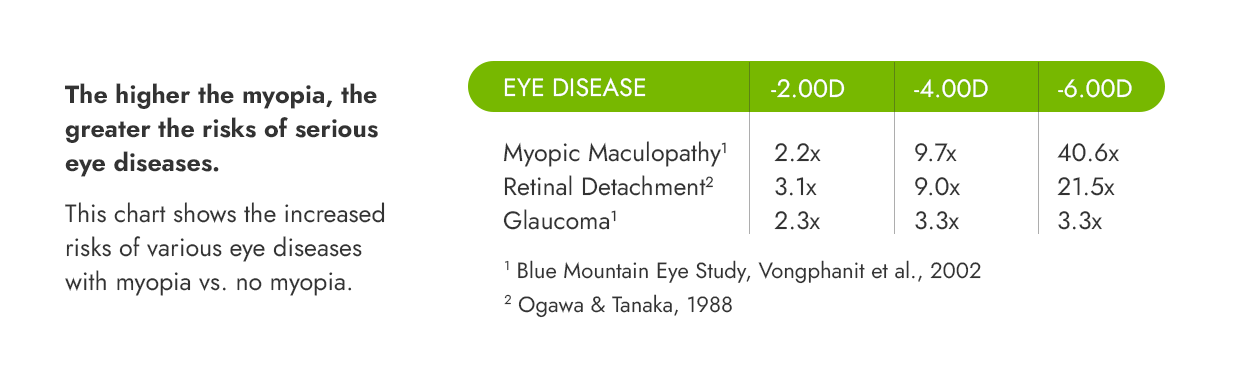
Myopia significantly increases your child's risk for serious eye diseases in their lifetime. Glasses only compensate for your child's blurry distance vision — they don't stop their vision from continuing to deteriorate. Higher levels of myopia significantly increase your child's risks for serious eye diseases, like retinal disease and glaucoma. Early intervention is key to slow or even stop the progression of myopia in your child.
Can you slow the progression of myopia in children?
YES! In expert hands, myopia treatment can slow down or even stop their eyes from becoming more myopic (nearsighted). Stronger glasses each year should not be normal. There is no cure, but you can most likely improve how your eyes are changing. Currently, our office focuses on 4 myopia treatments: Myopia Control Spectacle Lenses, prescription eye drops, daytime contact lenses, and overnight contact lenses.
Treehouse Eyes Patient Testimonials
Ready to see if myopia management is right for your child?

Have more questions about myopia management?


- Monday 8:00am - 6:00pm
- Tuesday 9:00am - 6:00pm
- Wednesday Closed
- Thursday 8:00am - 6:00pm
- Friday 7:00am - 5:00pm
- Saturday Closed
- Sunday Closed
Bad Weather or Emergency Office Closures will be updated on our Anderson Eyecare Facebook Page

© 2026 Anderson Eyecare. All rights Reserved. Accessibility Statement - Privacy Policy - Sitemap
Powered by:


